Kawasaki Ninja 400 vs Kawasaki Ninja 650
The Kawasaki Ninja 650 is more powerful, while the Kawasaki Ninja 400 is lighter. The Kawasaki Ninja 400 produces 45 hp (33 kW), and its 36 kg mass advantage can make low-speed pushing and parking easier. The Ninja 650 offers more power for highway riding with a passenger, while the Ninja 400's lower mass can simplify maneuvering in tight spaces. Choose between stronger highway reserve and easier city maneuvering.
Data for different model years: Kawasaki Ninja 400 — 2024; Kawasaki Ninja 650 — 2011.
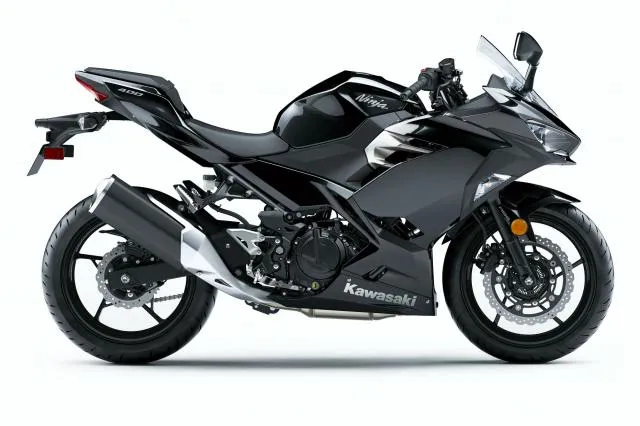
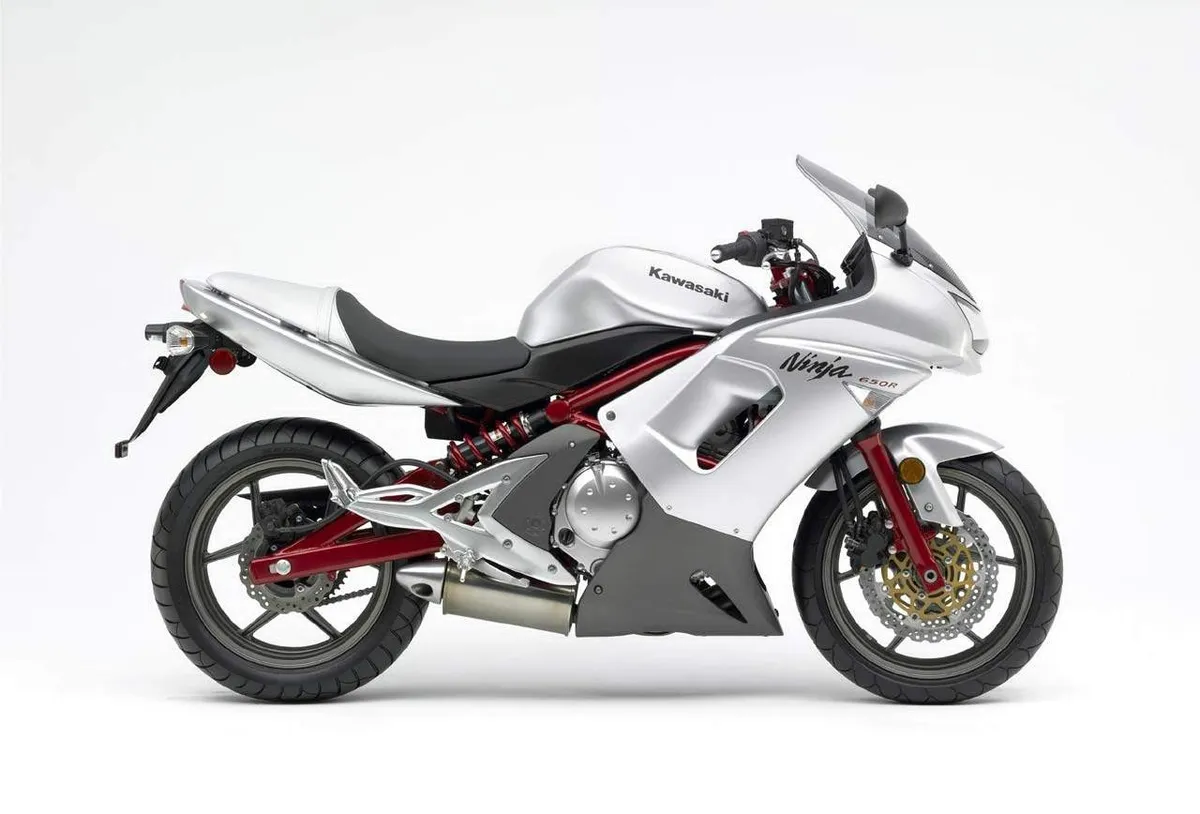
Kawasaki Ninja 400 vs Kawasaki Ninja 650: specifications
| Specifications side by side | Kawasaki Ninja 400Model year 2024 | Kawasaki Ninja 650Model year 2011 |
|---|---|---|
| Engine capacity | 399 cm³ | 649 cm³ |
| Power | 45 hp (33 kW) | 67 hp (50 kW) — Favorable value |
| Wet weight | 168 kg — Favorable value | 204 kg |
| Seat height | 785 mm | 790 mm |
| Fuel capacity | 14 L | 15.5 L — Favorable value |
Percentages use the second model as the baseline. Highlighting applies only to comparable power, torque, mass and fuel capacity; it does not predict handling or acceleration.
Engine
| Specifications side by side | Kawasaki Ninja 400Model year 2024 | Kawasaki Ninja 650Model year 2011 |
|---|---|---|
| Engine capacity | 399 cm³ | 649 cm³ |
| Power | 45 hp (33 kW) | 67 hp (50 kW) — Favorable value |
| Engine type | Parallel Twin, four-stroke | Parallel Twin, four-stroke |
| Bore × stroke | 70.0 x 51.8 mm | 83.0 x 60.0 mm |
| Compression ratio | 11.5:1 | 11.3:1 |
| Valves per cylinder | 4 | 4 |
| Cooling | Liquid | Liquid |
| Fuel system | Injection | Injection |
| Starting | Electric | Electric |
Transmission
| Specifications side by side | Kawasaki Ninja 400Model year 2024 | Kawasaki Ninja 650Model year 2011 |
|---|---|---|
| Gearbox | Manual 6-speed | Manual 6-speed |
| Clutch | Assist and Slipper Clutch | Wet, Multi Disc |
| Final drive | Chain | Chain |
Dimensions and weight
| Specifications side by side | Kawasaki Ninja 400Model year 2024 | Kawasaki Ninja 650Model year 2011 |
|---|---|---|
| Wet weight | 168 kg — Favorable value | 204 kg |
| Dry weight | 164 kg — Favorable value | 200 kg |
| Seat height | 785 mm | 790 mm |
| Length | 1,989 mm | 2,101 mm |
| Width | 711 mm | 759 mm |
| Height | 1,120 mm | 1,199 mm |
| Wheelbase | 1,369 mm | 1,410 mm |
| Ground clearance | 140 mm | 145 mm |
| Fuel capacity | 14 L | 15.5 L — Favorable value |
Chassis
| Specifications side by side | Kawasaki Ninja 400Model year 2024 | Kawasaki Ninja 650Model year 2011 |
|---|---|---|
| Frame | Trellis, high-tensile steel | Semi-double cradle, high-tensile steel |
| Front suspension | 41mm hydraulic telescopic fork | 41mm hydraulic telescopic fork / 4.7 in. |
| Rear suspension | Horizontal back-link with adjustable spring preload | Single offset laydown shock with adjustable spring preload / 4.9 in. |
| Front wheel travel | 119 mm | 119 mm |
| Rear wheel travel | 130 mm | 124 mm |
| Rake | 24.7° | 25.0° |
| Trail | 91 mm | 107 mm |
Brakes
| Specifications side by side | Kawasaki Ninja 400Model year 2024 | Kawasaki Ninja 650Model year 2011 |
|---|---|---|
| Front brakes | Single disc. Single petal-type disc with 2-piston calipers. Optional ABS. | Double disc |
| Rear brakes | Single disc. Single petal-type disc with single-piston caliper. Optional ABS. | Single disc |
| Front brake diameter | 310 mm | 300 mm |
| Rear brake diameter | 220 mm | 220 mm |
| Front tire | 110/70-17 | 120/70-17 |
| Rear tire | 150/70-17 | 160/60-17 |
Key differences
This comparison uses Kawasaki Ninja 400 from 2024 and Kawasaki Ninja 650 from 2011.
Power
Kawasaki Ninja 400
45 hp (33 kW)
Kawasaki Ninja 650
67 hp (50 kW)
Highlighted valueWet weight
Kawasaki Ninja 400
168 kg
Highlighted valueKawasaki Ninja 650
204 kg
Engine capacity
Kawasaki Ninja 400
399 cm³
Kawasaki Ninja 650
649 cm³
Highlighted valueSeat height
Kawasaki Ninja 400
785 mm
Highlighted valueKawasaki Ninja 650
790 mm
Kawasaki Ninja 400 vs Kawasaki Ninja 650: which one to choose?
- Choose Kawasaki Ninja 650 if you ride highways with a passenger and want more acceleration reserve: 50.2 %.
- Choose Kawasaki Ninja 400 if easier city pushing and parking matter: 36 kg.
- Choose Kawasaki Ninja 400 if numerical A2 limits matter; only this model fits them at 45 hp (33 kW). By these data, check approval in your market.
FAQ
- Which motorcycle has more power?
- The Kawasaki Ninja 650 has more power, at 67 hp (50 kW) versus 45 hp (33 kW) for the Kawasaki Ninja 400. This gives it greater acceleration potential, not a guaranteed top speed.
- Which motorcycle is lighter?
- The Kawasaki Ninja 400 is lighter at 168 kg wet-weight, compared with 204 kg wet-weight for the Kawasaki Ninja 650.
- Which motorcycle has the lower seat?
- The Kawasaki Ninja 400 has the lower seat, at 785 mm compared with 790 mm for the Kawasaki Ninja 650.