Kawasaki Ninja 400 vs Kawasaki Z400
The Kawasaki Z400 is marginally more powerful and lighter than the Kawasaki Ninja 400, yet they are very close in specifications; its stated output is 45 hp (34 kW). Engine sizes are very close: Kawasaki Ninja 400 399 cm³; Kawasaki Z400 399 cm³. Neither model has a seat-height edge, so the supplied figures point to a narrow comparison rather than a clear all-round winner.
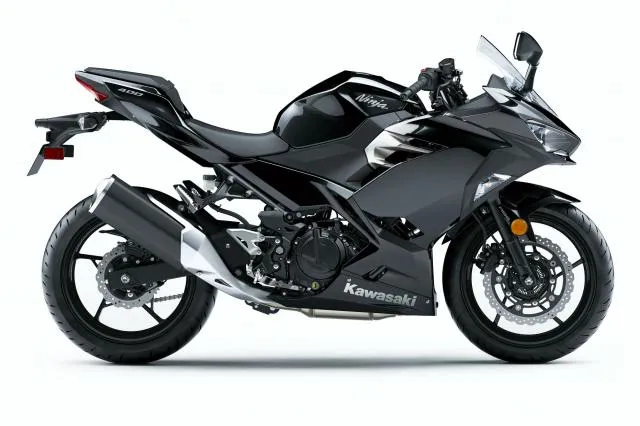
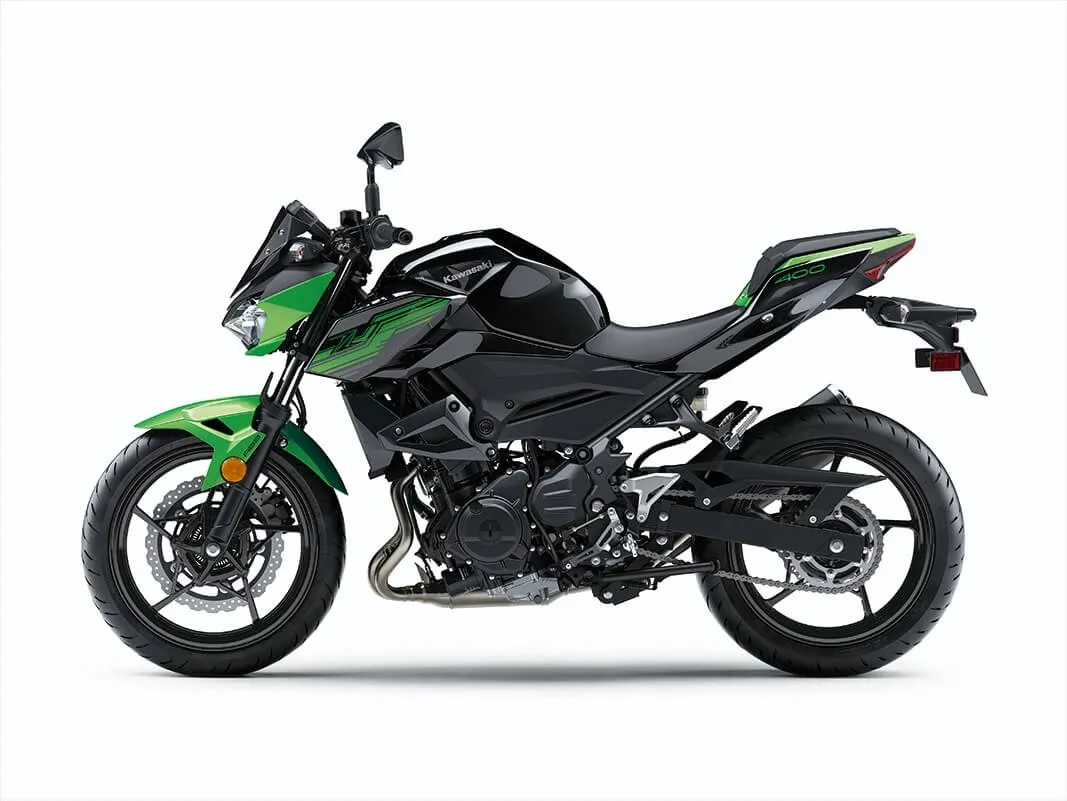
Kawasaki Ninja 400 vs Kawasaki Z400: specifications
| Specifications side by side | Kawasaki Ninja 400Model year 2024 | Kawasaki Z400Model year 2024 |
|---|---|---|
| Engine capacity | 399 cm³ | 399 cm³ |
| Power | 45 hp (33 kW) | 45 hp (34 kW) — Favorable value |
| Wet weight | 168 kg | 165 kg — Favorable value |
| Seat height | 785 mm | 785 mm |
| Fuel capacity | 14 L | 14 L |
Percentages use the second model as the baseline. Highlighting applies only to comparable power, torque, mass and fuel capacity; it does not predict handling or acceleration.
Engine
| Specifications side by side | Kawasaki Ninja 400Model year 2024 | Kawasaki Z400Model year 2024 |
|---|---|---|
| Engine capacity | 399 cm³ | 399 cm³ |
| Power | 45 hp (33 kW) | 45 hp (34 kW) — Favorable value |
| Engine type | Parallel Twin, four-stroke | Parallel Twin, four-stroke |
| Bore × stroke | 70.0 x 51.8 mm | 70.0 x 51.8 mm |
| Compression ratio | 11.5:1 | 11.5:1 |
| Valves per cylinder | 4 | 4 |
| Cooling | Liquid | Liquid |
| Fuel system | Injection | Injection |
| Starting | Electric | Electric |
| Fuel consumption (EPA) | 3.45 L/100 km | 3.45 L/100 km |
Transmission
| Specifications side by side | Kawasaki Ninja 400Model year 2024 | Kawasaki Z400Model year 2024 |
|---|---|---|
| Gearbox | Manual 6-speed | Manual 6-speed |
| Clutch | Assist and Slipper Clutch | Assist and slipper Clutch |
| Final drive | Chain | Chain |
Dimensions and weight
| Specifications side by side | Kawasaki Ninja 400Model year 2024 | Kawasaki Z400Model year 2024 |
|---|---|---|
| Wet weight | 168 kg | 165 kg — Favorable value |
| Seat height | 785 mm | 785 mm |
| Length | 1,989 mm | 1,989 mm |
| Width | 711 mm | 800 mm |
| Height | 1,120 mm | 1,054 mm |
| Wheelbase | 1,369 mm | 1,369 mm |
| Ground clearance | 140 mm | 145 mm |
| Fuel capacity | 14 L | 14 L |
Chassis
| Specifications side by side | Kawasaki Ninja 400Model year 2024 | Kawasaki Z400Model year 2024 |
|---|---|---|
| Frame | Trellis, high-tensile steel | Trellis, high-tensile steel |
| Front suspension | 41mm hydraulic telescopic fork | Telescopic fork |
| Rear suspension | Horizontal back-link with adjustable spring preload | Uni-Trak® swingarm |
| Front wheel travel | 119 mm | 119 mm |
| Rear wheel travel | 130 mm | 130 mm |
| Rake | 24.7° | 24.5° |
| Trail | 91 mm | 91 mm |
Brakes
| Specifications side by side | Kawasaki Ninja 400Model year 2024 | Kawasaki Z400Model year 2024 |
|---|---|---|
| Front brakes | Single disc. Single petal-type disc with 2-piston calipers. Optional ABS. | Single disc. ABS |
| Rear brakes | Single disc. Single petal-type disc with single-piston caliper. Optional ABS. | Single disc. ABS |
| Front brake diameter | 310 mm | 310 mm |
| Front tire | 110/70-17 | 110/70-17M |
| Rear tire | 150/70-17 | 150/60-17M |
| ABS | Optional | Yes |
Key differences
This comparison uses Kawasaki Ninja 400 from 2024 and Kawasaki Z400 from 2024.
Power
Kawasaki Ninja 400
45 hp (33 kW)
Kawasaki Z400
45 hp (34 kW)
Highlighted valueWet weight
Kawasaki Ninja 400
168 kg
Kawasaki Z400
165 kg
Highlighted valueEngine capacity
Kawasaki Ninja 400
399 cm³
Kawasaki Z400
399 cm³
Seat height
Kawasaki Ninja 400
785 mm
Kawasaki Z400
785 mm
Kawasaki Ninja 400 vs Kawasaki Z400: which one to choose?
These models are very close in specifications.
- Kawasaki Ninja 400 fits the numerical A2 limits at 45 hp (33 kW); by these data, check approval in your market.
- Kawasaki Z400 has the higher stated kilowatt figure: 45 hp (34 kW).
FAQ
- Which motorcycle has the higher stated power?
- The Kawasaki Z400 has the higher stated kilowatt figure: 45 hp (34 kW), versus 45 hp (33 kW) for the Kawasaki Ninja 400.
- Is either motorcycle lighter?
- The Kawasaki Z400 weighs 165 kg, compared with 168 kg for the Kawasaki Ninja 400.
- Are their seat heights different?
- No. Both have a seat height of 785 mm.