Kawasaki Z650 vs Kawasaki Z400
The Kawasaki Z650 is the more powerful choice, while the Kawasaki Z400 is lighter by 21 kg. The Kawasaki Z650 delivers 67 hp (50 kW), giving it more reserve for highway riding and carrying a passenger; the Kawasaki Z400’s lower mass can make pushing and parking easier. Both are naked motorcycles, so the main distinction is whether you value stronger power for open-road use or a lighter bike that is easier to move around when stopped. Their shared seat height leaves no seat-height advantage between them.
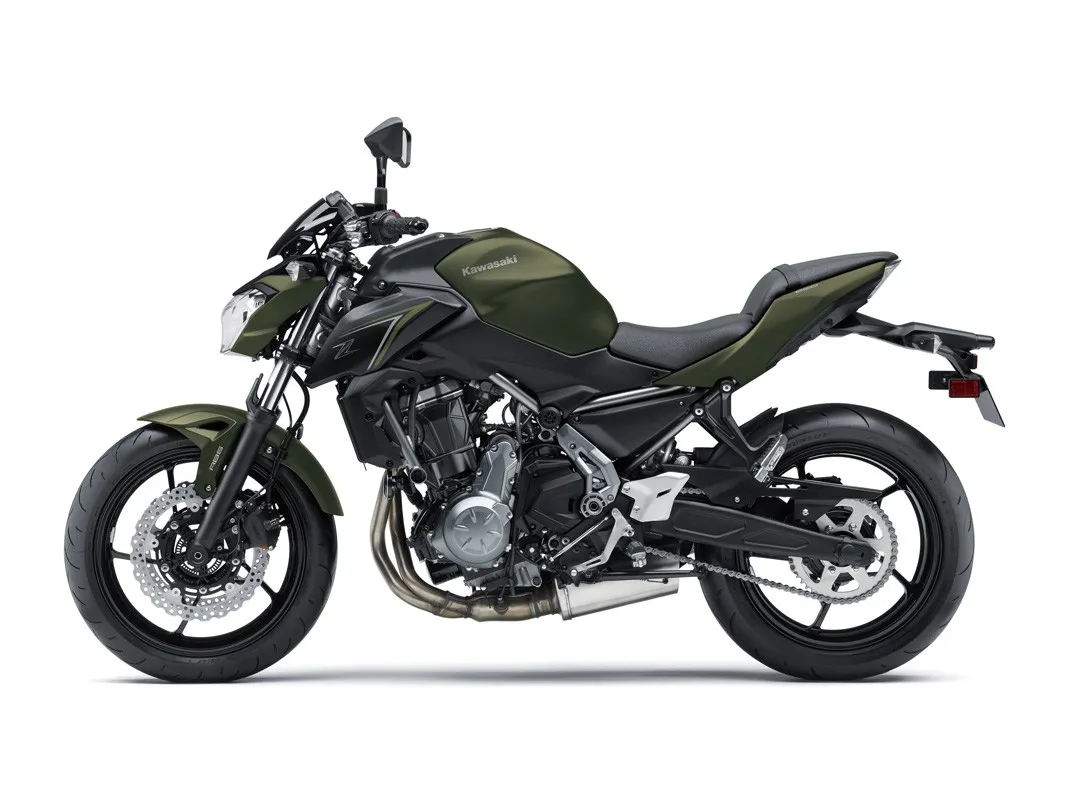
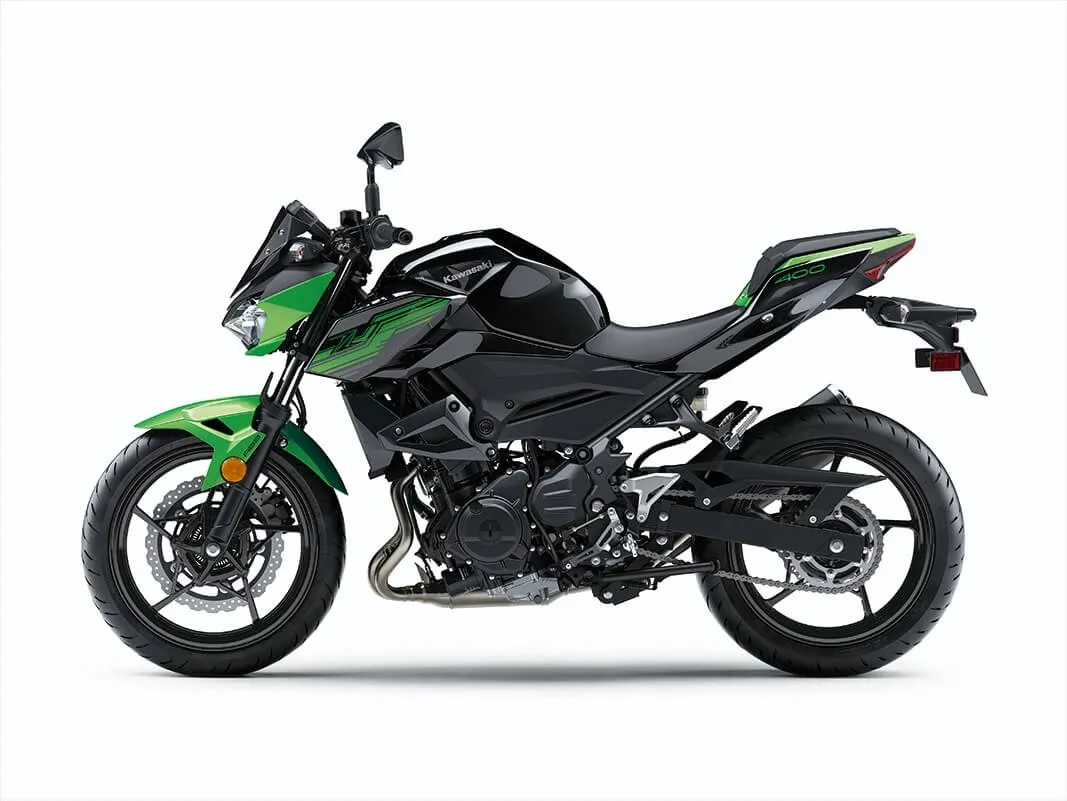
Kawasaki Z650 vs Kawasaki Z400: specifications
| Specifications side by side | Kawasaki Z650Model year 2026 | Kawasaki Z400Model year 2026 |
|---|---|---|
| Engine capacity | 649 cm³ | 399 cm³ |
| Power | 67 hp (50 kW) — Favorable value | 45 hp (34 kW) |
| Wet weight | 186 kg | 165 kg — Favorable value |
| Seat height | 785 mm | 785 mm |
| Fuel capacity | 15.1 L — Favorable value | 14 L |
Percentages use the second model as the baseline. Highlighting applies only to comparable power, torque, mass and fuel capacity; it does not predict handling or acceleration.
Engine
| Specifications side by side | Kawasaki Z650Model year 2026 | Kawasaki Z400Model year 2026 |
|---|---|---|
| Engine capacity | 649 cm³ | 399 cm³ |
| Power | 67 hp (50 kW) — Favorable value | 45 hp (34 kW) |
| Torque | 65.7 Nm — Favorable value | 38 Nm |
| Engine type | Parallel Twin, four-stroke | Parallel Twin, four-stroke |
| Bore × stroke | 83.0 x 60.0 mm | 70.0 x 51.8 mm |
| Compression ratio | 10.8:1 | 11.5:1 |
| Cooling | Liquid | Liquid |
| Fuel system | Injection | Injection |
| Starting | Electric | Electric |
Transmission
| Specifications side by side | Kawasaki Z650Model year 2026 | Kawasaki Z400Model year 2026 |
|---|---|---|
| Gearbox | Manual 6-speed | Manual 6-speed |
| Clutch | Wet multi-disc, manual | Assist and slipper Clutch |
| Final drive | Chain | Chain |
Dimensions and weight
| Specifications side by side | Kawasaki Z650Model year 2026 | Kawasaki Z400Model year 2026 |
|---|---|---|
| Wet weight | 186 kg | 165 kg — Favorable value |
| Seat height | 785 mm | 785 mm |
| Length | 2,065 mm | 1,989 mm |
| Width | 775 mm | 800 mm |
| Height | 1,080 mm | 1,054 mm |
| Wheelbase | 1,410 mm | 1,369 mm |
| Ground clearance | 130 mm | 145 mm |
| Fuel capacity | 15.1 L — Favorable value | 14 L |
Chassis
| Specifications side by side | Kawasaki Z650Model year 2026 | Kawasaki Z400Model year 2026 |
|---|---|---|
| Frame | Trellis, high-tensile steel | Trellis, high-tensile steel |
| Front suspension | 41 mm telescopic fork | Telescopic fork |
| Rear suspension | Horizontal Back-link with preload adjustment | Uni-Trak® swingarm |
| Front wheel travel | 124 mm | 119 mm |
| Rear wheel travel | 130 mm | 130 mm |
| Rake | 24.0° | 24.5° |
| Trail | 100 mm | 91 mm |
Brakes
| Specifications side by side | Kawasaki Z650Model year 2026 | Kawasaki Z400Model year 2026 |
|---|---|---|
| Front brakes | Double disc. ABS. Petal-type rotors with two-piston calipers | Single disc. ABS |
| Rear brakes | Single disc. ABS | Single disc. ABS |
| Front brake diameter | 300 mm | 310 mm |
| Front tire | 120/70-ZR17 | 110/70-17M |
| Rear tire | 160/60-ZR17 | 150/60-17M |
| ABS | Yes | Yes |
Key differences
This comparison uses Kawasaki Z650 from 2026 and Kawasaki Z400 from 2026.
Power
Kawasaki Z650
67 hp (50 kW)
Highlighted valueKawasaki Z400
45 hp (34 kW)
Wet weight
Kawasaki Z650
186 kg
Kawasaki Z400
165 kg
Highlighted valueEngine capacity
Kawasaki Z650
649 cm³
Highlighted valueKawasaki Z400
399 cm³
Torque
Kawasaki Z650
65.7 Nm
Highlighted valueKawasaki Z400
38 Nm
Seat height
Kawasaki Z650
785 mm
Kawasaki Z400
785 mm
Kawasaki Z650 vs Kawasaki Z400: which one to choose?
- Choose Kawasaki Z650 if you want more acceleration reserve for highway riding and a passenger, with a 49.6 % power advantage.
- Choose Kawasaki Z400 if lower comparable mass helps with pushing and parking in city use; it weighs 21 kg less.
FAQ
- Which motorcycle has more power?
- The Kawasaki Z650 has 67 hp (50 kW), compared with the Kawasaki Z400’s 45 hp (34 kW).
- Which motorcycle is lighter?
- The Kawasaki Z400 is 21 kg lighter, and both have a 785 mm seat height.
- Do either of these motorcycles meet the numerical A2 limits?
- Neither meets the stated numerical A2 limits; by these data, check approval in your market.