Low seat height motorcycles: how to choose, class by class
Contents
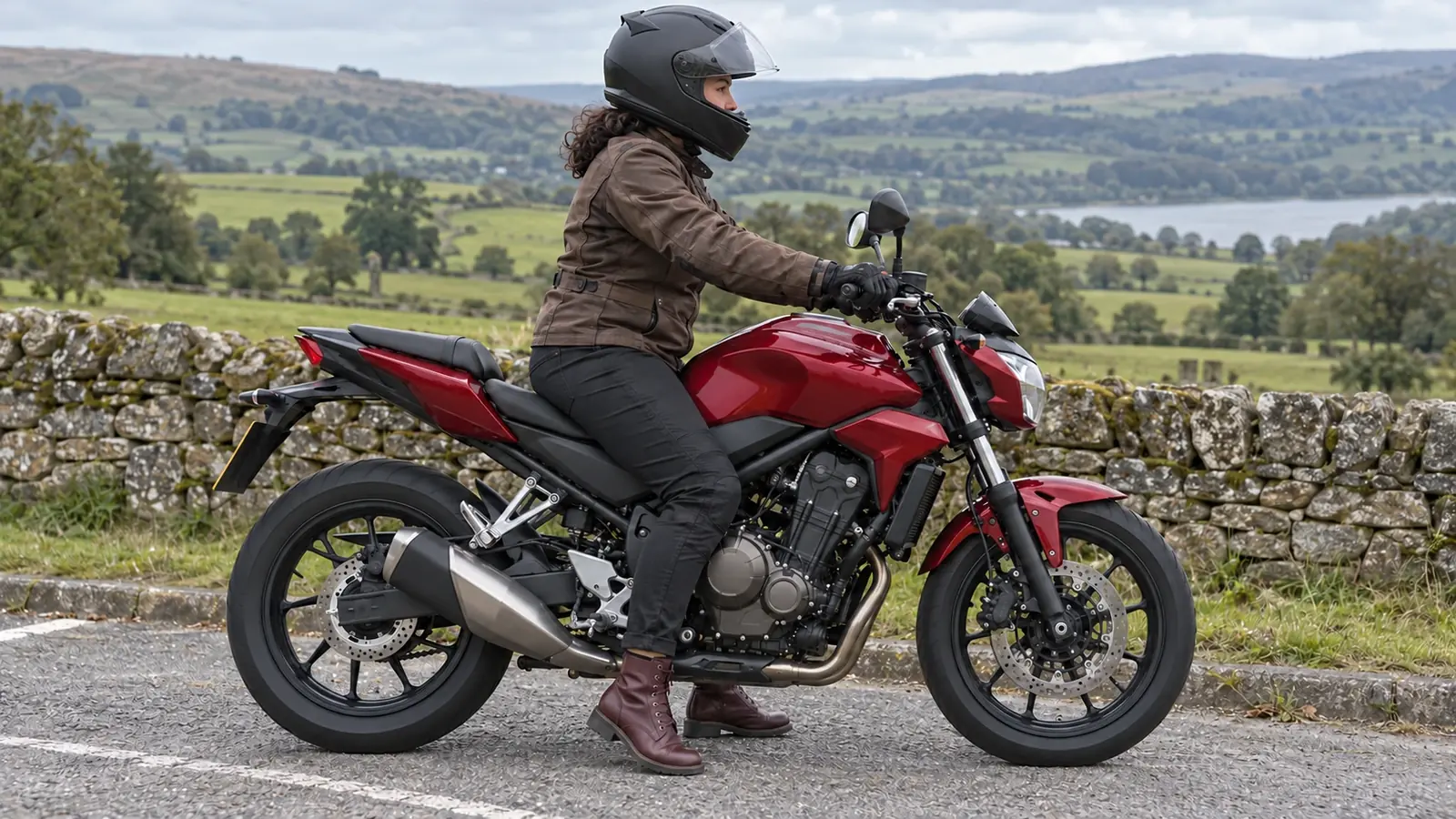
The lowest seat on a spec sheet isn't always the easiest bike to live with. A cruiser with a 681 mm seat can be harder to manoeuvre in a car park than a light naked bike at 780 mm, because at a standstill both your footing and the weight of the bike matter. Seat width, the position of the centre of gravity and how far the suspension sinks under you change the picture as well.
This guide therefore compares more than one number. For each class we look at the published seat height, the published weight and what the design means when you stop, using the models in the Moto Wiki catalogue. The tables show the lowest-seat models recorded in each catalogue class, rather than every model available. Some of these models are sold only in certain markets and a few are no longer in production, so check availability with a local dealer before you shop.
Quick picks
- Lowest seat in this comparison: the Kawasaki Vulcan 900 Classic at 681 mm, but it weighs 281 kg.
- Low seat and moderate weight: the Honda Rebel 300 at 691 mm and 165.1 kg.
- Lightest to hold up: the Honda Metropolitan NCW50 scooter at 719 mm and 81.2 kg, the lightest bike in our tables.
- Naked bike: the Kawasaki W230 at 745 mm and 143 kg.
- Sport style: the Yamaha YZF-R3 at 780 mm and 169.2 kg.
How we compared the bikes
Seat height and weight come from the model pages in our catalogue, which draw on manufacturer data. We haven't measured any of the bikes ourselves, and nothing here comes from a road test.
Seat height is the published figure, normally taken without a rider on board. Weight is the published running-order weight, which manufacturers quote as wet, kerb or ready-to-ride weight. They don't all measure it the same way, so treat a few kilograms either way as a tie. The catalogue can include an announced upcoming model year, so a model's presence in a table isn't a guarantee that it is on sale now.
When you sit down, the suspension compresses and the seat drops. That's sag. Our rider fit calculator uses an assumed 30 mm as a rough estimate, but we don't have measured sag for individual models, and the real figure depends on the suspension set-up and on your weight.
Cruisers
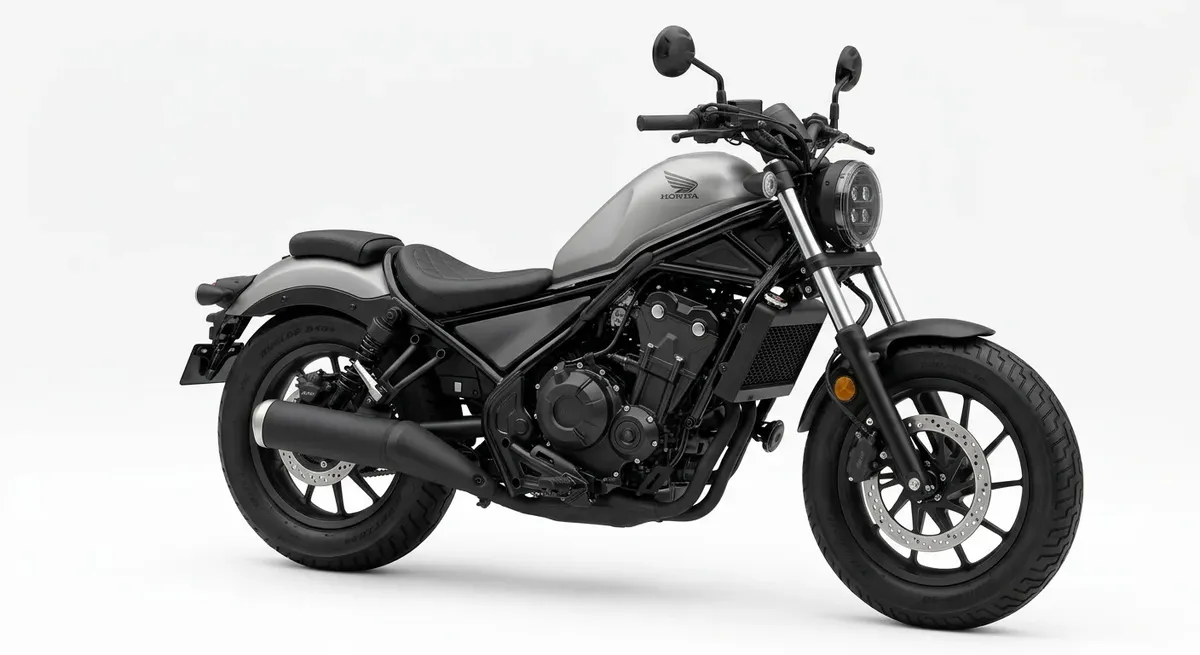
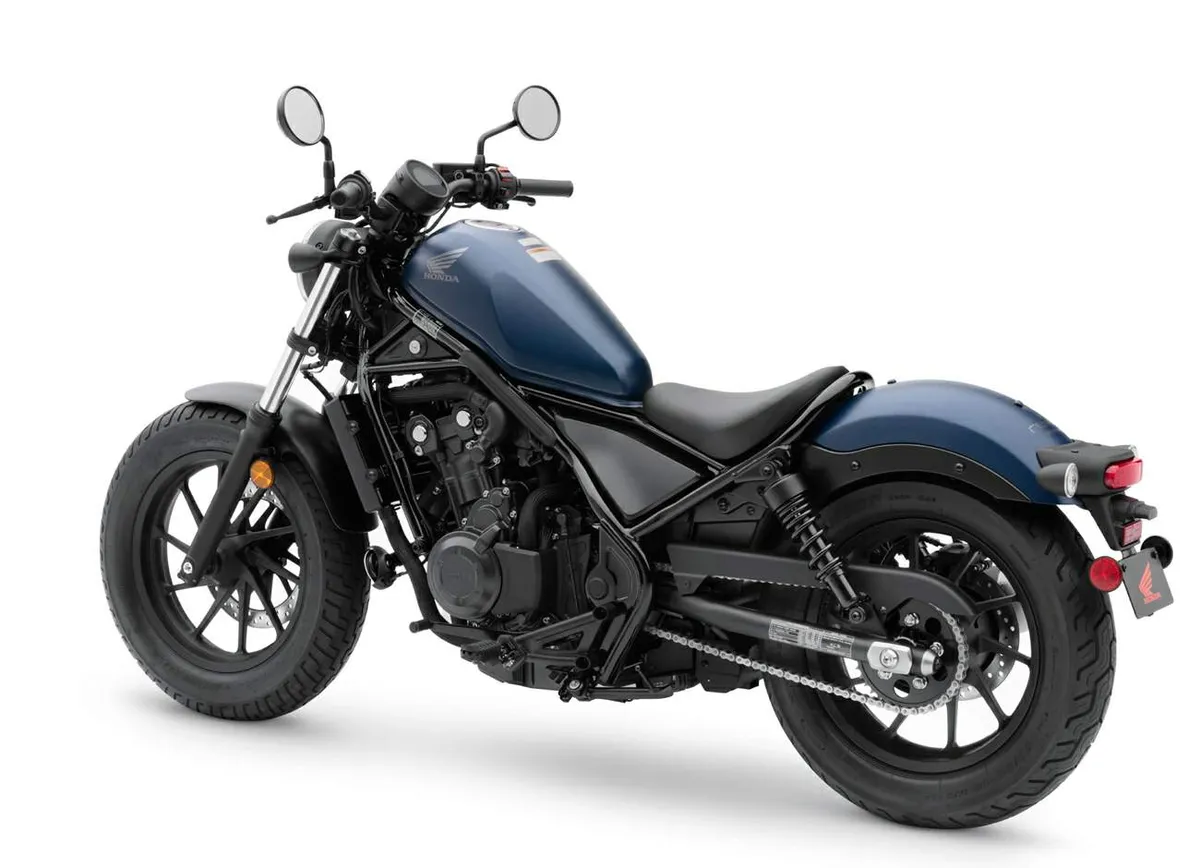
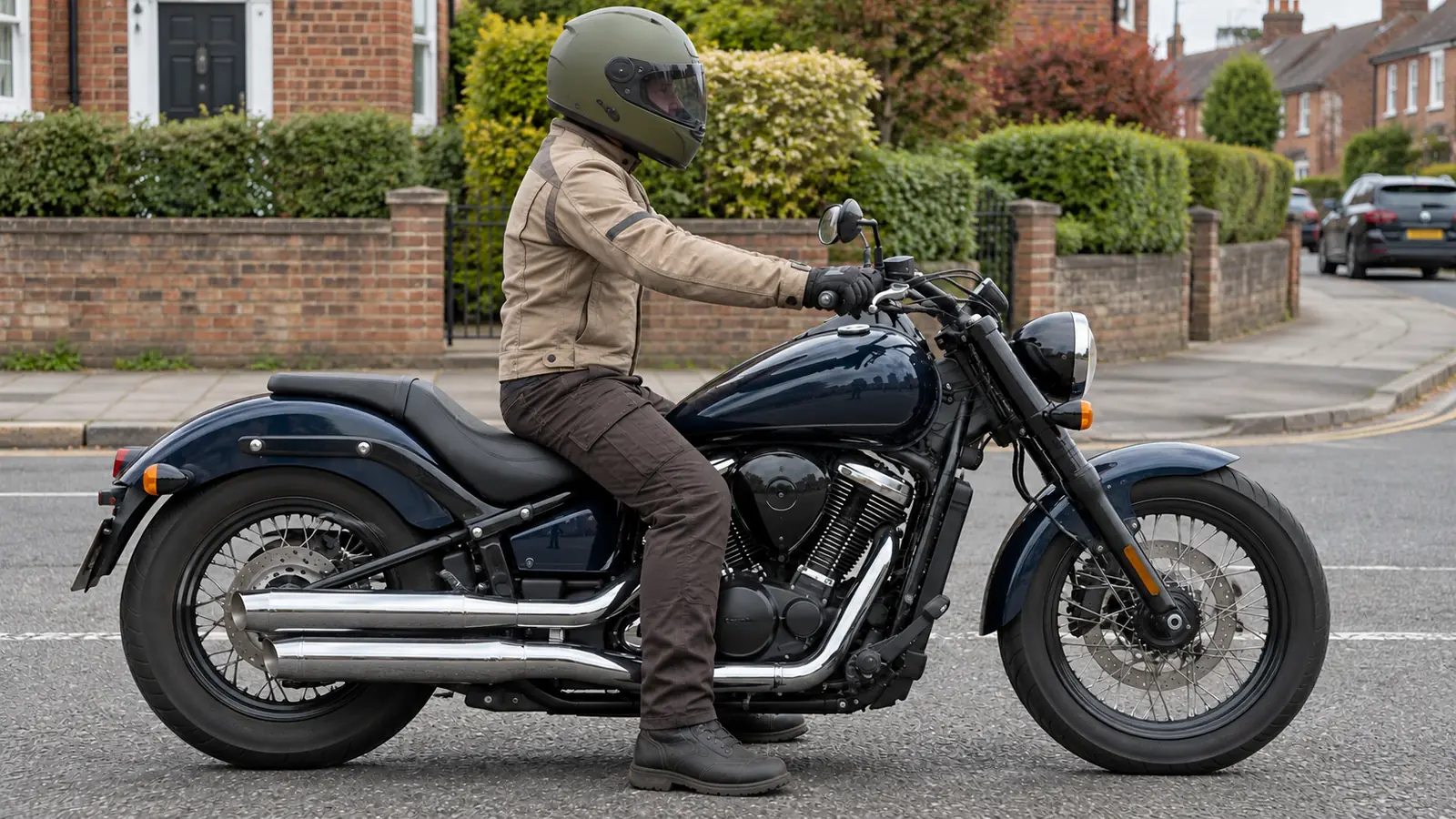
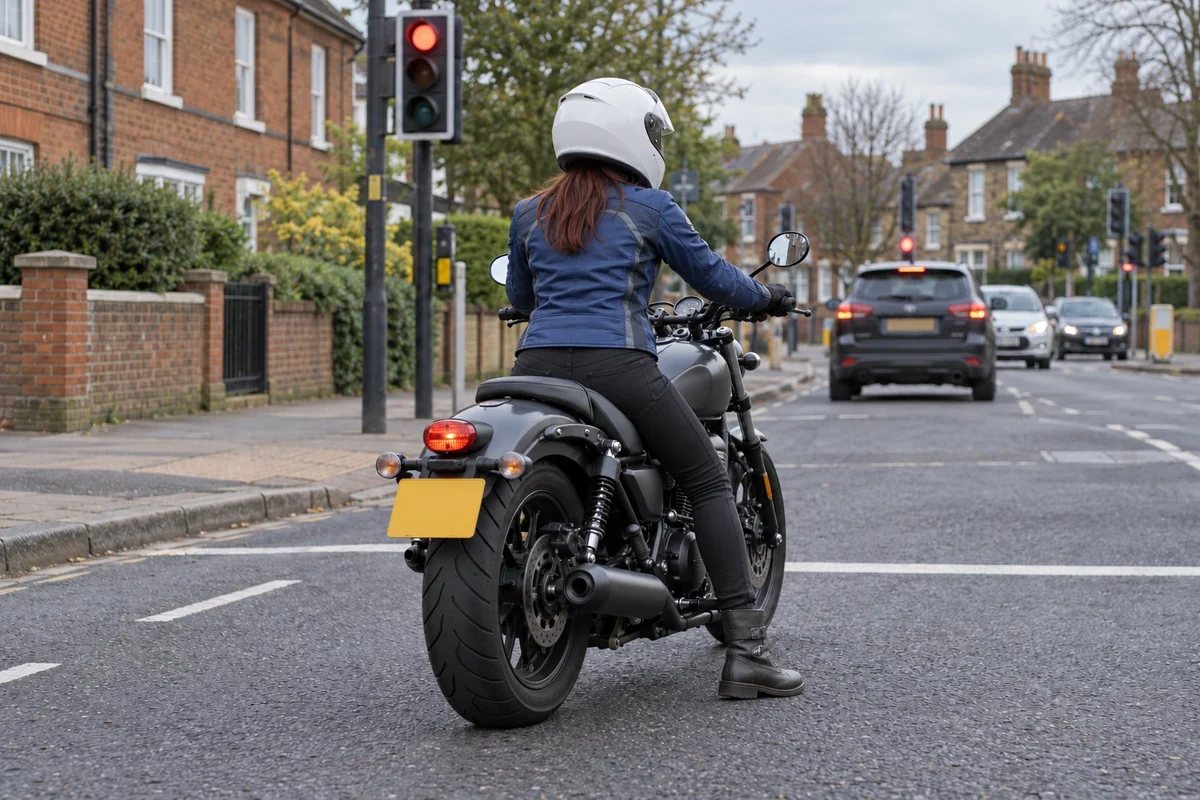
Cruisers are the obvious starting point, with seats well below anything else in this guide. The number to watch is the weight. Most of a cruiser's mass sits low, which can make it feel steadier when it's upright, but there's no hiding 281 kg, the published weight of the Kawasaki Vulcan 900 Classic, which also has the lowest seat here at 681 mm. The Honda Rebel 300 has a 691 mm seat and weighs 165.1 kg, so on paper it's far more forgiving to lift off the side stand and to shuffle about a garage. The rest of the class is in the table.
| Model | Seat height | Power | Published weight | Indicative licence category |
|---|---|---|---|---|
| Kawasaki Vulcan 900 Classic | 681 mm | 51 hp (38 kW) | 281 kg | Not eligible at full power |
| Yamaha V Star 250 | 686 mm | 21 hp (16 kW) | 147 kg | A2 |
| Honda Rebel 500 | 690 mm | 46 hp (34 kW) | 191 kg | A2 |
| Yamaha Bolt R-Spec | 690 mm | 54 hp (40 kW) | 245.9 kg | Not eligible at full power |
| Triumph Bonneville Bobber | 690 mm | 77 hp (58 kW) | 251 kg | Not eligible at full power |
| Honda Rebel 300 | 691 mm | not listed | 165.1 kg | Not verified |
Scooters
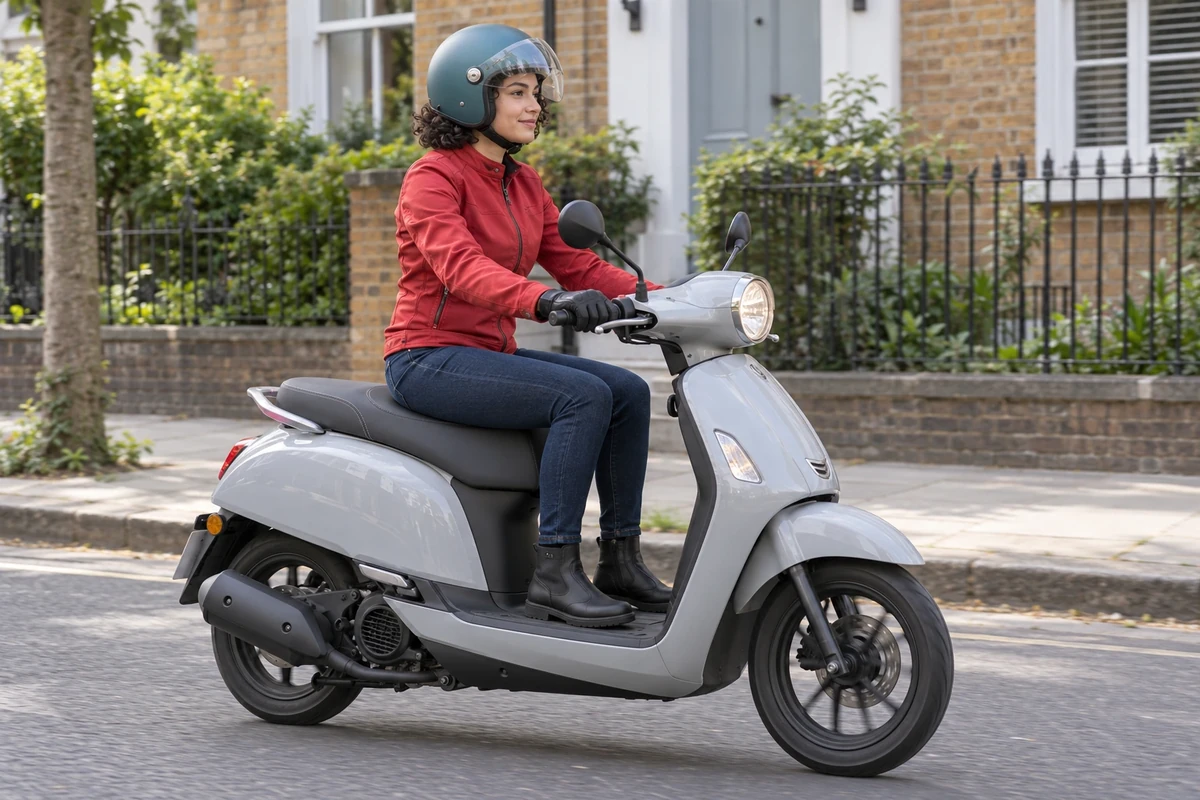
On a scooter the seat height is only half the story. Scooters usually leave more room to move your legs forward at a stop, because there is no fuel tank between your knees. The benefit varies: some step-through models have a flat floor, while larger scooters may have a substantial central tunnel. The lowest seat in our list is the 719 mm on the Honda Metropolitan NCW50, a bike that weighs 81.2 kg. Larger scooters such as the Honda Forza 350, at 780 mm and 186 kg, bring far more power, and you'll notice the extra mass when you wheel one backwards out of a parking space.
| Model | Seat height | Power | Published weight | Indicative licence category |
|---|---|---|---|---|
| Honda Metropolitan NCW50 | 719 mm | 4 hp (3 kW) | 81.2 kg | Not verified |
| Honda Ruckus NPS50 | 734 mm | 5.4 hp (4 kW) | 88 kg | Not verified |
| Yamaha NMAX 125 | 765 mm | 12 hp (9 kW) | 131 kg | A1 |
| BMW C 400 X | 775 mm | 34 hp (25 kW) | 204 kg | A2 |
| Honda Forza 350 | 780 mm | 29 hp (22 kW) | 186 kg | A2 |
| Honda ADV160 | 780 mm | 16 hp (12 kW) | 133.4 kg | A2 |
Naked bikes
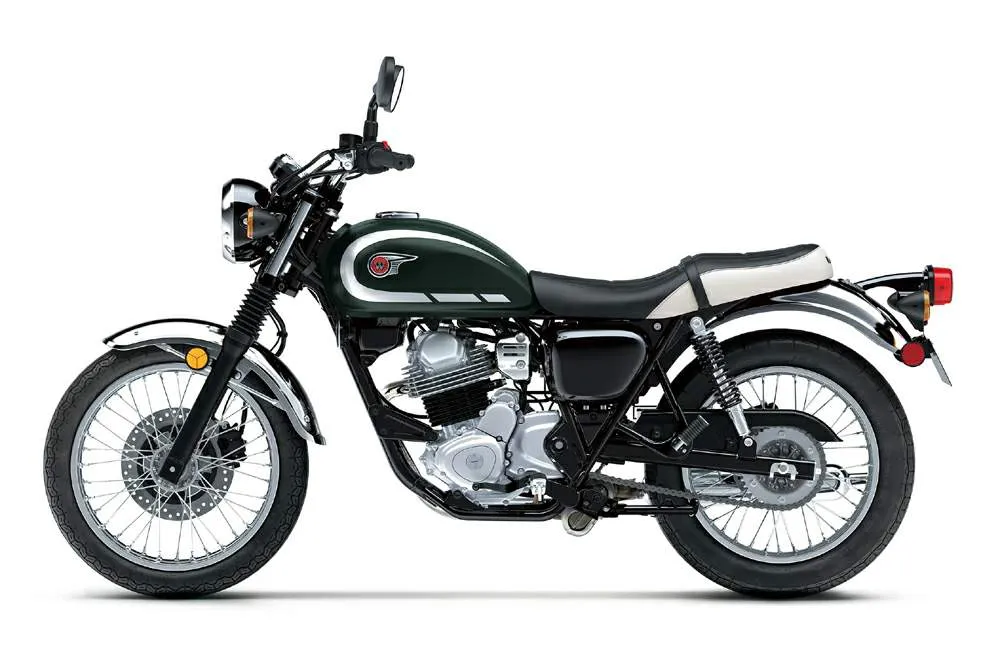
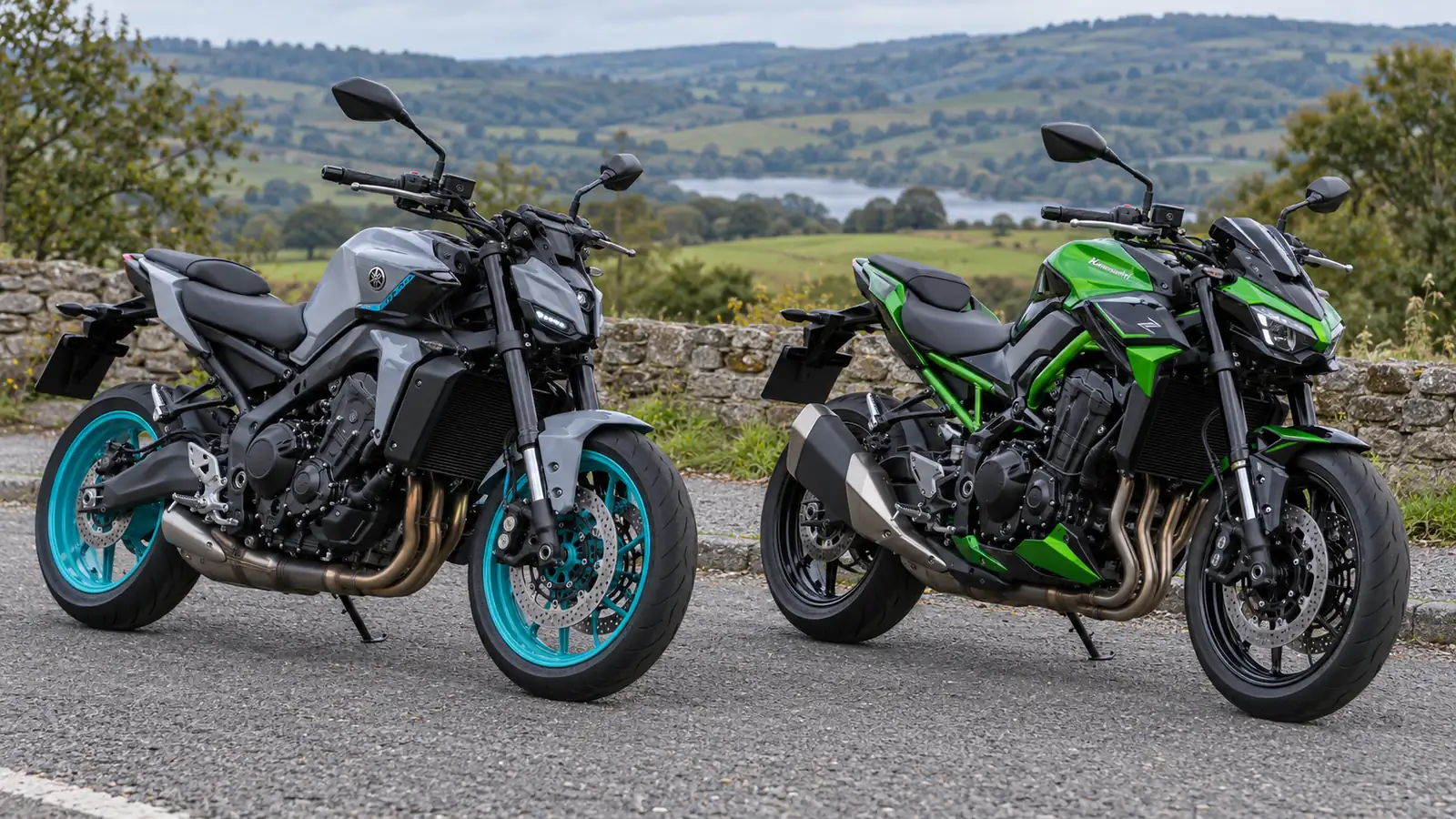
Most naked bikes sit you fairly upright, with your weight over the seat rather than your wrists, which helps when you come to a stop. Seats in our list start at 745 mm on the Kawasaki W230. Width is the hidden variable. A narrow seat lets your legs drop closer to vertical, so a bike can feel lower than one with a wider seat at the same height. Seat width is rarely published, which is why we can't rank it here and why a showroom sit tells you more than the number. The Honda CB750 Hornet, at 795 mm, is by far the most powerful bike in this group.
| Model | Seat height | Power | Published weight | Indicative licence category |
|---|---|---|---|---|
| Kawasaki W230 | 745 mm | 18 hp (13 kW) | 143 kg | A2 |
| Yamaha MT-03 | 780 mm | 42 hp (31 kW) | 169.2 kg | A2 |
| BMW G 310 R | 785 mm | 34 hp (25 kW) | 164 kg | A2 |
| Honda CB500F | 790 mm | 47 hp (35 kW) | 192 kg | A2 |
| Triumph Speed 400 | 790 mm | 39 hp (29 kW) | 170 kg | A2 |
| Honda CB750 Hornet | 795 mm | 91 hp (68 kW) | 192 kg | Not eligible at full power |
Sport bikes
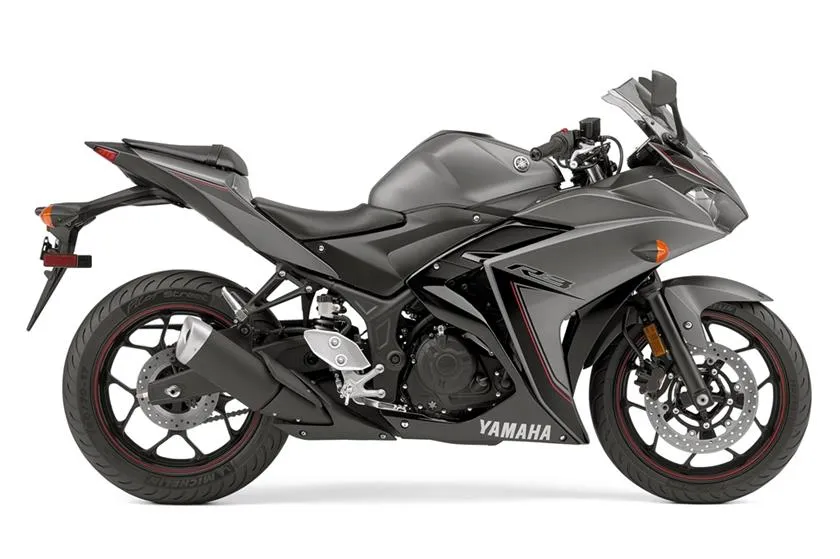
Sport bikes add a forward lean, so more of your weight rests on the bars while you ride. At a stop you sit up and reach down from a seat that is usually slim where it meets the tank, which works in a shorter rider's favour. The lowest seat in our list is 780 mm, shared by the Yamaha YZF-R3 and Yamaha R25, and small-capacity bikes make up most of the group. The Suzuki GSX-R125 is the lightest of them at 137 kg.
| Model | Seat height | Power | Published weight | Indicative licence category |
|---|---|---|---|---|
| Yamaha YZF-R3 | 780 mm | 42 hp (31 kW) | 169.2 kg | A2 |
| Yamaha R25 | 780 mm | 35 hp (26 kW) | 166 kg | A2 |
| Kawasaki Ninja 300 | 785 mm | 39 hp (29 kW) | 176 kg | A2 |
| Kawasaki Ninja 400 | 785 mm | 45 hp (33 kW) | 168 kg | A2 |
| Suzuki GSX-R125 | 785 mm | 15 hp (11 kW) | 137 kg | A1 |
Adventure and dual-sport bikes
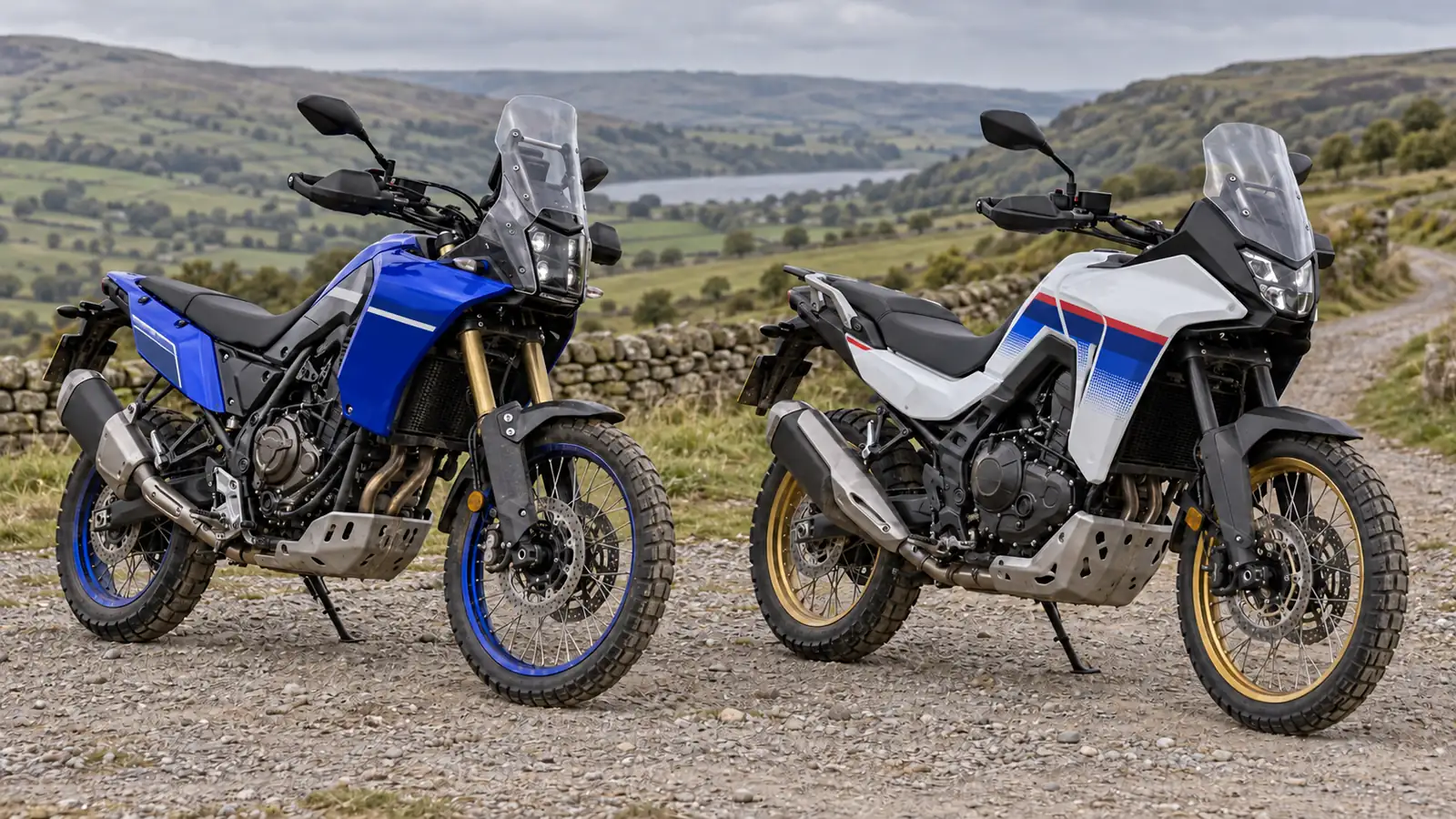
Tall seats come with the territory here, because long-travel suspension needs room. Even the lowest adventure bike in our list, the Suzuki SV-7GX at 795 mm, sits above the lowest bike in every other class. Long-travel suspension may also move further under the rider, even when it is set up correctly, so the seat can drop more than on a road bike. Several makers offer a low seat or a lowered-suspension version of their bigger adventure models. We haven't checked which of those exist for the bikes in our list, so confirm the exact version with a dealer. Dual-sport is the outlier, with the Yamaha TW200 at 126.1 kg and 790 mm, while the rest of that group starts at 833 mm.
Adventure bikes
| Model | Seat height | Power | Published weight | Indicative licence category |
|---|---|---|---|---|
| Suzuki SV-7GX | 795 mm | 72 hp (54 kW) | 211 kg | Not eligible at full power |
| Honda NC750X | 800 mm | 58 hp (43 kW) | 214 kg | Not eligible at full power |
| Triumph Tiger 900 GT | 820 mm | 107 hp (79 kW) | 219 kg | Not eligible at full power |
| Suzuki V-Strom 800 | 825 mm | 81 hp (61 kW) | 223 kg | Not eligible at full power |
| Suzuki V-Strom 650 | 835 mm | 71 hp (53 kW) | 213 kg | Not eligible at full power |
| Honda Africa Twin (CRF1100L) | 850 mm | 99 hp (74 kW) | 226 kg | Not eligible at full power |
Dual-sport bikes
| Model | Seat height | Power | Published weight | Indicative licence category |
|---|---|---|---|---|
| Yamaha TW200 | 790 mm | 16 hp (12 kW) | 126.1 kg | A2 |
| Honda XR150L | 833 mm | 12 hp (9 kW) | 127.9 kg | A2 |
Lowering a motorcycle: the options
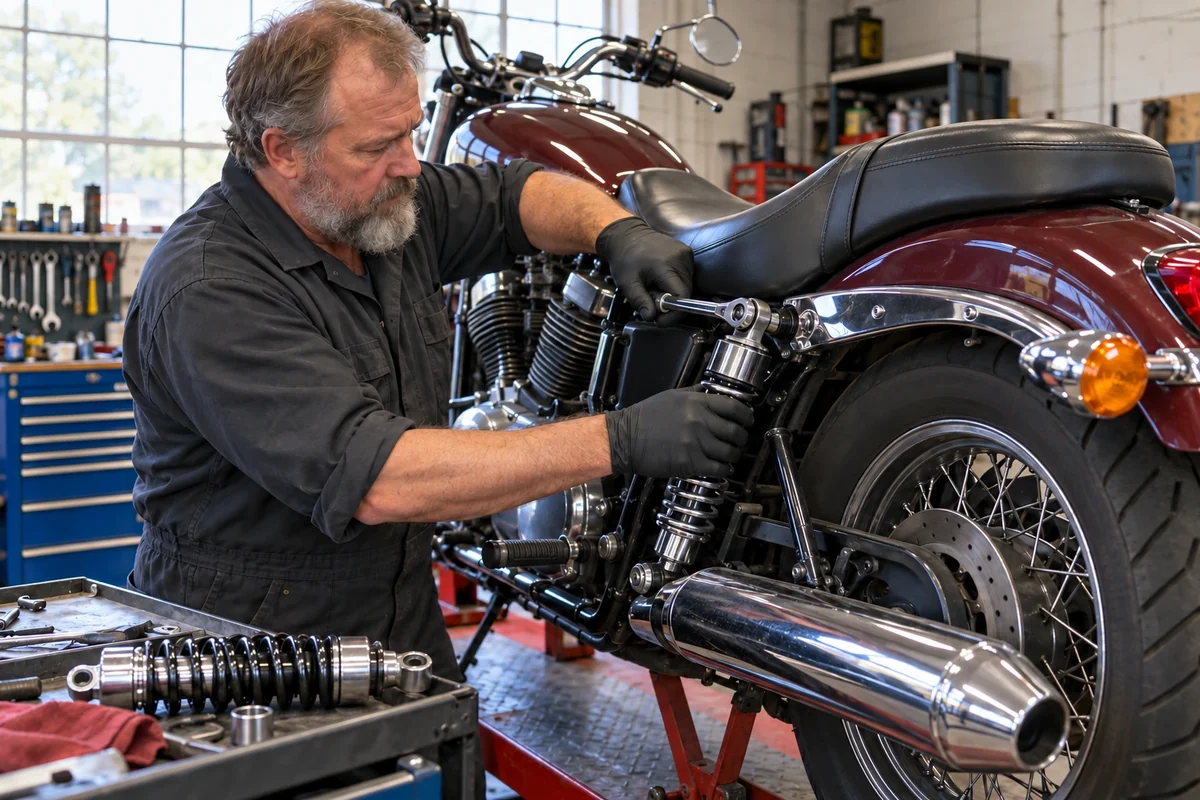
Lowering a bike isn't one thing, and the routes differ a lot in what they change. The main options, plus one set-up point that is often confused with lowering:
- Factory low seat. A thinner or reshaped seat offered by the manufacturer for that model. It lowers where you sit without touching the suspension.
- Reshaped seat padding. An upholsterer trims or reshapes the foam. It lowers the seat but can change comfort on longer rides.
- Correct preload and sag set-up. Preload should be adjusted for the rider and load, not used simply as a way to lower the bike. A suspension specialist can check whether the current set-up gives the intended rider sag.
- Lowering links or a lowered shock. These lower the rear of the bike and can change the suspension's behaviour and the bike's balance.
- Moving the forks in the yokes. This lowers the front end and changes the steering geometry.
Any change to the suspension can affect ground clearance, steering geometry, available suspension travel, the angle of the side stand and the way the bike handles. Front and rear need to work together. We don't give set-up instructions here: talk to a dealer or a suspension specialist before you change anything.
A1 and A2 licences: what the last column means
In the UK and the EU your licence category can narrow the field before seat height does. A1 covers bikes up to 125 cc, 11 kW and 0.1 kW/kg. A2 covers bikes up to 35 kW and 0.2 kW/kg, and for restricted bikes the original power must not exceed twice the restricted output. Category AM generally covers mopeds with a maximum design speed of no more than 45 km/h; engine capacity alone does not determine the category. The table therefore indicates AM only where the relevant market specification has been confirmed, and we haven't confirmed it for any model here. The last column shows A1 or A2 where the published power and weight fall within those limits, 'Not eligible at full power' where they don't, and 'Not verified' where our data isn't enough to say. Because the power and weight displayed in the tables are rounded, borderline models are marked 'Not verified' rather than classified from the rounded figures alone.
That's a guide, not a legal check. The ratio is calculated from the figures for the exact version of the bike, restricted versions exist, and national rules differ in the detail, so check the registration documents and your own country's requirements.
Which class suits which situation
- Lowest possible seat: a cruiser, as long as you're comfortable with its weight.
- Least weight to hold up: a small scooter, or the lightest dual-sport in our list.
- Balance of access and everyday use: a light naked bike.
- Touring: an adventure bike with a low or adjustable seat, tried in person before you commit.
Frequently asked questions
Can I choose a bike by inside leg length alone? Not really. Inside leg length is a starting point, but seat width, weight, sag and the shape of the tank and seat decide how far your feet actually reach. Use the rider fit calculator for a rough estimate, then sit on the bike.
Is one foot on the ground enough? Plenty of riders manage with one foot, or with the toes of both, and it works on level ground. It gets harder on a camber or a slope, with a passenger or luggage, and on a heavy bike. How much margin you want is a personal call.
Does lowering the suspension affect handling? It can. A change in ride height may alter ground clearance, steering geometry and travel, and it can change the way the side stand sits. Get advice from a dealer or a suspension specialist first.
What's the difference between a low seat and a lowering kit? A low seat changes the cushion, so it lowers where you sit and leaves the suspension alone. A lowering kit changes the suspension, which affects the bike's balance as well as your reach. A factory low seat is generally the gentler route.
How do I check the fit in a showroom? Wear the boots you ride in and ask a member of staff to steady the bike, especially if you're new to riding. Sit with your weight on it, bring it upright off the side stand and hold it there, then turn the bars slowly each way. If a low seat option exists, ask to try that version.
Do riding boots change how far my feet reach? Yes. A thick sole may add useful reach, while a soft, thin sole adds very little. Test the bike in the boots you will actually ride in, but make sure they still give you proper control of the foot levers.